Update on two pillars of the EU customs reform: the EU Customs Data Hub and the redefinition of the ‘importer’

Attorney at Michael Lux BV, former Head of Unit ‘Customs Legislation’ and ‘Customs Procedures’, EU Commission, Michael Lux BV, Belgium
Published 24 Jun 2025
Topic spotlight
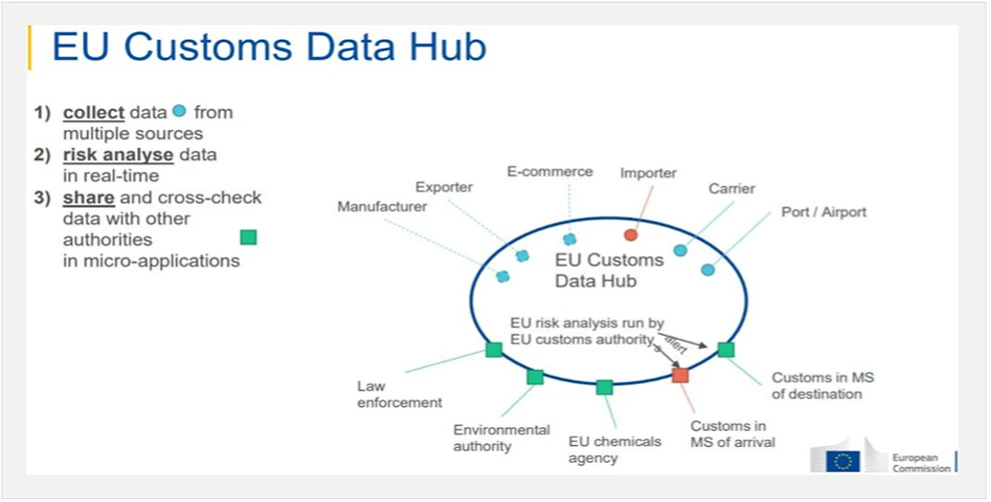
Under the Polish Presidency, which expires at the end of June, the Council was able to draw up a complete compromise text on the Commission's proposal of a new Union Customs Code (nUCC). Apart from further minor amendments until the Council's decision on a negotiating mandate, this text will – alongside the amendments adopted by Parliament in 2024 – form the basis for the trilogue negotiations between the Council, Parliament and the Commission under the Danish Presidency, which starts on 1 July 2025. Important changes compared to the Commission's proposal concern the deletion of the detailed provisions on penalties for customs infringements, the re-introduction of the temporary storage facility with a corresponding authorisation (and a retention period of 90 days), as well as the re-introduction of re-export as a non-customs regime; insofar the current legal situation will be largely retained. The status of the AEOC is also to be retained besides newly introduced so-called ‘Trust and Check Trader’ status. This paper therefore focuses on two aspects where significant changes can be expected in practice: the redefinition of the ‘importer’ and the gradual introduction of a central customs data hub to replace national customs clearance systems in the long term.


