CustomsClear
Prices
|
CustomsClear
+370 664 26393info@customsclear.net

Company

  • About company
  • Team members
  • Authors
  • Terms of use
  • Privacy policy

Knowledge platform

  • About the platform
  • Articles
  • Journal
  • Videos
  • Courses
  • Events
  • Platform news
  • Glossary

AI assistants

  • Start free trial
  • Explore assistants
  • Classify AI
  • Smart Taric AI
  • Sanctions AI
  • News agent
  • Learning companion
  • About CustomsClear AI

Newsletter

Subscribe for the latest news, top reads, and handy resources

LinkedInFacebookYouTubeX

© 2026 CC Learning, UAB, All rights reserved.

Cookie preferences

We use essential cookies to ensure our website functions properly. We would also like to use analytics cookies to help us understand how visitors interact with our website, enabling us to improve your experience.

Until you choose, and if you decline, Google gets only basic visit information without cookies, so we can still count visits.

  1. Home
  2. Articles

Case of classification of unassembled goods OR How to save €389 973?

Enrika Naujokė
Co-founder and Director, CustomsClear, Lithuania
Published 30 Apr 2023
Case of classification of unassembled goods OR How to save €389 973?
Adobe Stock
Case law
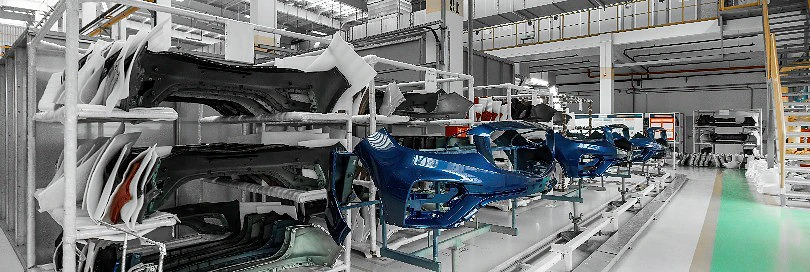
An unassembled good must be classified as a complete good. For example, if you import disassembled bicycles, you still have to declare them as bicycles and pay the import duties due on the bicycles. But maybe you could be smarter and save the import duties by declaring half of the bicycles’ parts in your name and the other half in a friend's name? In addition, perhaps it would help to place the parts under different customs procedures before releasing them for free circulation?

Member access

Register on the platform and enjoy complimentary access to an article of your choice!

The article is available exclusively to our members.

Members have access to all videos, articles and online events! See membership plans

Already have an account?

Related content

Classify AI in practice: two composite goods, one decisive question

Classify AI in practice: two composite goods, one decisive question

CustomsClear
CustomsClear
02 Sep 2026

How a customs broker used Classify AI to classify melamine-impregnated paper and a wood-plastic decking board - two products where the code depends on which material defines the goods

Classification
Use cases
Classify AI in practice: three consignments, one decisive attribute each

Classify AI in practice: three consignments, one decisive attribute each

CustomsClear
CustomsClear
02 Sep 2026

How a declarant in a logistics company classified a navigation device, e-cigarette pods and seasonal décor - three goods where the commercial description never states the fact that decides the…

Classification
Use cases
Classification of composite goods: which material decides?

Classification of composite goods: which material decides?

Enrika Naujokė
Enrika Naujokė
26 Aug 2026

Which material decides the classification of composite goods? In a recent judgment, the EU General Court gave the newest answer: decorative paper impregnated with melamine resin - declared as paper,…

Classification
Case law
Challenging a BTI decision: the route, the deadlines and the money

Challenging a BTI decision: the route, the deadlines and the money

Enrika Naujokė
Enrika Naujokė
31 Jul 2019·Updated 26 Aug 2026

Customs has issued you a BTI with a code you disagree with. You cannot amend it, you cannot give it up, and applying again - in any member state -…

Classification
Case law
Post-clearance value in Communication C/2026/3319: what the 76th HS Committee changes, and what to do about it

Post-clearance value in Communication C/2026/3319: what the 76th HS Committee changes, and what to do about it

Virginija Dordzikienė
12 Aug 2026

If you have already opened Communication C/2026/3319 in the Official Journal, you have seen the list. Two Explanatory Note amendments, seventeen Classification Opinions, one deletion and one Classification Decision. Codes…

Classification
Topic spotlight
Why companies need to rethink how they manage tariff classification

Why companies need to rethink how they manage tariff classification

Jakub Dobrzynski
Jakub Dobrzynski
12 Jul 2026

This article examines why tariff classification errors persist in many companies, revealing that the root cause is often not a lack of customs knowledge, but rather weak processes, poor product…

Classification
Topic spotlight
Customs Compliance & Risk Management, Issue 20, April / May 2023
Enrika Naujokė
Classification
Classify AI
Sanctions AI
Smart Taric AI